
Do an Epochē – Drop it, Think Anew, Start Over…
A Timely Intervention – Only for Geeks and Incorrigible Defenders of an Ancient Humanistic Idea

Have you ever been told that “you’re so sceptical”? From now on, take that as a compliment to your free and inquiring state of mind. Not everyone has the ability or the courage to stand athwart the crowd. Human beings are, at bottom, copycats who mostly do what everyone else is doing.
The people most threatened by probing thoughts are, of course, those who rest on an unshakable faith in something that must not be disturbed: faith in themselves, in a sovereign, in the one true morality, in an elevated rationality, or in the uniqueness of the nation. And the higher the castle they have managed to build, the greater the threat any single objection will seem to pose.
It is worth remembering that the liberal idea rests, to a large extent, on the assumption that even the most critical voices must be allowed to be heard; that different experiences and interpretations may freely express both reverence and scepticism.
This attitude, which to some extent underpins Western civilisation, is now under serious threat from a new kind of romantic dogmatism, developed with the aim of re-establishing a set of absolute truths. Such “truths” have now been stated publicly in a new security document from the White House, called the “National Security Strategy”.
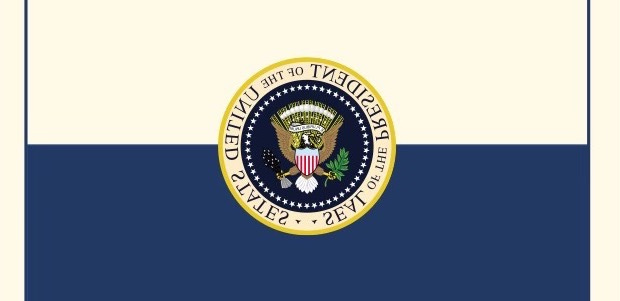
There is no way around the fact that this document tries to overturn even those values that the West has long regarded as its highest ideals, which in practice means that the humanistic virtues are now being abandoned. Instead, the document speaks of the ideals of the Enlightenment as more or less responsible for our “civilisational erasure” and calls to “cultivate resistance” against this heritage, which is largely portrayed as a central cause of Europe’s decline. What is attacked on a broad front is the very idea of the European Renaissance – where these virtues were revived – and the subsequently reborn Enlightenment project.
These ideals are now being undermined in a Machiavellian spirit – and since the majority of the population has unfortunately been rendered both historically illiterate and ignorant, through a media landscape and an education system that no longer provide tools for critical thought, this new line is accepted without too much whining or fuss.
Scepticism and relativism have always been key elements of the liberal idea’s self-understanding, but are now, from the perspective of this document, regarded as something suspect and depraved. Anything that smells of relativism, pluralism, or, as they like to write, “woke”, is portrayed as a threat to national sovereignty, security, and the desired order of power. The document is a clear marker of a changed spirit of the age.
In a climate where a state security doctrine wants to nail down a single interpretation of reality, the Pyrrhonian idea of epochē – of temporarily laying down one’s judgement – is no longer an antiquarian curiosity but a necessary counter-movement. To lay down one’s judgement does not mean to be without judgement, but to find a stronger and better one.1
And this, after that little detour through today’s absurdities, is really where I wanted to end up: it is always from the sovereign’s perspective that the negative image of the sceptic has been drawn, since the sceptic is consistently portrayed as an enemy, a heretic, a denier of God, or a traitor to the fatherland.
To be a sceptic, from a sceptical perspective, is rather a matter of intellectual precision and mental hygiene. Given the nature of human beings, their striving for power, and their ability to construct stories about anything and everything under the sun, it is almost a necessary mental safeguard to be able to critically examine every tendency toward rigid convictions and rigid messages, and to dare to go against assumptions that have never really been tested. That is the sceptic’s role in a free society.
Sextus Empiricus writes in Outlines of Pyrrhonism that there are those who claim to have found the truth – such as Aristotle, the Epicureans, the Stoics, and several others – whereas the sceptics go on searching.
They therefore called themselves “skeptikoi”, meaning those who continue to ask questions, those who go on with their investigations – in sharp contrast to those who have stopped looking, namely the dogmatists.
There have, of course, always been different kinds of scepticism. It is possible to doubt many things: God, religion, the state, the senses, reason, science, liberalism – any explanation one does not find sufficiently convincing. In this way, quite different currents of thought could still be gathered into a kind of shared sceptical tendency that “was in the air”, even though their scepticism did not always converge or aim at the same targets.
For a time in antiquity, scepticism became so successful that it even came to shape Plato’s own Academy for several centuries. This orientation began with Arcesilaus of Pitane, who also developed a method to keep thought from getting stuck in arbitrary beliefs.
This method was called epochē and meant that, at least in my interpretation, one temporarily laid down one’s judgement in situations where the state of affairs was uncertain. One performed an epochē much like castling in a game of chess: you make a break that reshapes the board, you step back a few moves in order to test what you previously took for granted – not to abandon the game, but to see the position anew. And one hears here also a clear echo of Protagoras’ famous statement about the gods, formulated a few hundred years before Sextos, where he quite simply makes precisely such a move – an epochē:
“As for the gods, I am unable to know anything with certainty, whether they exist or do not exist. For many obstacles stand in the way of such knowledge – the obscurity of the matter and the shortness of human life.”
A similar stance can be heard in the following words of Sextus Empiricus, which describe how we must move in a world full of uncertainty – a probing attitude that we much later also encounter in Michel de Montaigne’s attempts to measure existence:
“I do not now say that things are really thus, but only that they appear to me now to be thus.”
Yet scepticism has always been met with the same counter-attack from dogmatic quarters as earlier was directed against the relativism of the sophists: if you are sceptical about everything, then, it is said, you should be consistent and also be sceptical about your own scepticism.
This argument has, throughout history, been a common – and to a sceptic, extremely tiresome – objection. From the rationalist (read: philosophical) side it has even been regarded as the definitive refutation of both scepticism and relativism and has been given the label “the peritrope”.
Because of this peritrope – which is supposed to topple all talk of scepticism and relativism – I have fastened on a small sentence in Sextus Empiricus’ Outlines of Pyrrhonism, which has particularly caught my attention in this context. In the middle of the text, something suddenly flares into life:
“Even the man who denies that all things are relative thereby admits that all things are relative; for by opposing us he shows that the very assertion ‘all things are relative’ stands in relation to us, and is therefore not absolute.”
This is almost word-for-word the kind of exchange of arguments that resulted in my own experience of the “Firebrand” I once suffered and have written about earlier.2
What Sextus does not do in this passage is to push the line of thought all the way to its limit and turn it back on the critics themselves. What he might well have added here is a final knock-out blow to the very dogmatic claim:
“You who deny that all things are relative confirm, by your very certainty, exactly what you intend to deny: that every claim to truth stands in relation to those who advance it.”
Sextus never actually said this – but at least it has now been said by me. Plato probably sensed something along these lines when he called sophistic rhetoric a Hydra – cut off one head and two more soon grow in its place. Let us hope that this terrifying Hydra will come back to life.

This very text on epochē was originally meant to be included in what I called the twelvefold path to a better understanding of things. In that piece, however, only eleven different aspects were presented – epochē ought to be added as the twelfth for the overall picture to be numerically correct.

I have previously given an account of this, for me highly dramatic, event in the piece titled “The Firebrand!”.

“skeptikoi” - “those who continue to ask questions in sharp contrast to the dogmatists” and “every claim to truth stands in relation to those who advance it” This reminds me of the adage “consider the source”. To invoke probity as to the origins of dogma, that is often delivered unconsciously, is necessary. To be agreeable, and yet to review a priori thinking by asking questions, either reveals deep knowledge or merely borrowed thoughts. A favorite quote: “the unexamined life is not worth living”. Thank you for your tutorials on examining life as existential fresh air.